
Signs Your Boiler Needs Servicing Before Winter
A boiler that struggled through last winter may not make it through the next one. These are the signs that it needs attention now, before the cold arrives.
Boiler failures spike in November and December every year. The pattern is predictable: a boiler that limped through last winter, was barely used through spring and summer, then is asked to work flat out again when temperatures drop. The strain of returning to full load after months of light use is often what pushes a worn component to failure.
The best time to deal with a boiler problem is before winter, when engineers are more available, parts are in stock, and you have time to plan rather than react. These are the signs that your boiler needs professional attention before the cold months arrive.
Warning Signs to Watch For
The boiler takes longer to heat up than it used to
If your radiators are taking noticeably longer to reach temperature than they did last winter, the boiler may be losing efficiency. This could be due to a build-up of scale or sludge in the system, a failing pump, or a heat exchanger that needs cleaning. A service will identify which.
Unusual noises
A healthy boiler is relatively quiet. Unusual sounds are worth taking seriously:
- Banging or kettling — a rumbling noise like a kettle boiling — often indicates limescale build-up on the heat exchanger. This is more common in hard water areas.
- Gurgling sounds can indicate trapped air in the system or a blockage in the condensate pipe.
- Whistling may point to pressure problems or a failing pump.
- Clunking when the boiler fires up or shuts down can indicate a worn ignition component or pump fault.
None of these noises should be ignored. They tend to get worse, not better, and they put additional strain on other components.
The pilot light keeps going out
If your boiler has a standing pilot light (common on older models) and it frequently goes out, or if your boiler repeatedly fails to ignite, the thermocouple may be worn out. A thermocouple is a relatively cheap part to replace, but left unaddressed the problem will not resolve itself.
Increased energy bills without explanation
A boiler that is working harder than it should to produce the same amount of heat will consume more gas. If your energy bills last winter were noticeably higher than the year before and your usage habits had not changed, reduced boiler efficiency is one explanation. A service can check whether the appliance is running at its rated efficiency.
The boiler is losing pressure
A combi or system boiler should maintain a pressure of around 1 to 1.5 bar when the system is cold. If you find yourself re-pressurising the boiler regularly — more than once every few months — there is a leak somewhere in the system or the pressure relief valve is releasing pressure when it should not be. This warrants investigation before winter.
Radiators are cold at the top
Radiators that are warm at the bottom but cold at the top have trapped air in them. Bleeding the radiators is a simple job you can do yourself. However, if the problem returns repeatedly after bleeding, it may indicate a fault with the boiler's automatic air vent or a problem with the expansion vessel that needs a Gas Safe engineer to address.
Radiators are cold at the bottom
Radiators cold at the bottom but warm at the top indicate sludge build-up in the system — a mixture of rust and debris that settles in the lowest points of the radiators. A power flush by a heating engineer can clear this and significantly improve heating performance. This is worth doing before winter rather than during it.
There is a yellow or orange flame instead of blue
The flame on a gas boiler should be a steady, bright blue colour. A yellow or orange flame can indicate incomplete combustion and the potential presence of carbon monoxide. This is a serious safety concern. Turn the boiler off and call a Gas Safe registered engineer before using it again. Make sure you have a working carbon monoxide alarm in the same room as the boiler.
The boiler is over 12 years old
Boilers lose efficiency as they age, and components become harder to source for very old models. An annual service becomes more important, not less, as a boiler ages. If yours is over 12 to 15 years old, an engineer can advise whether a service will extend its life meaningfully or whether replacement is a better investment before this winter.
What Happens During a Service
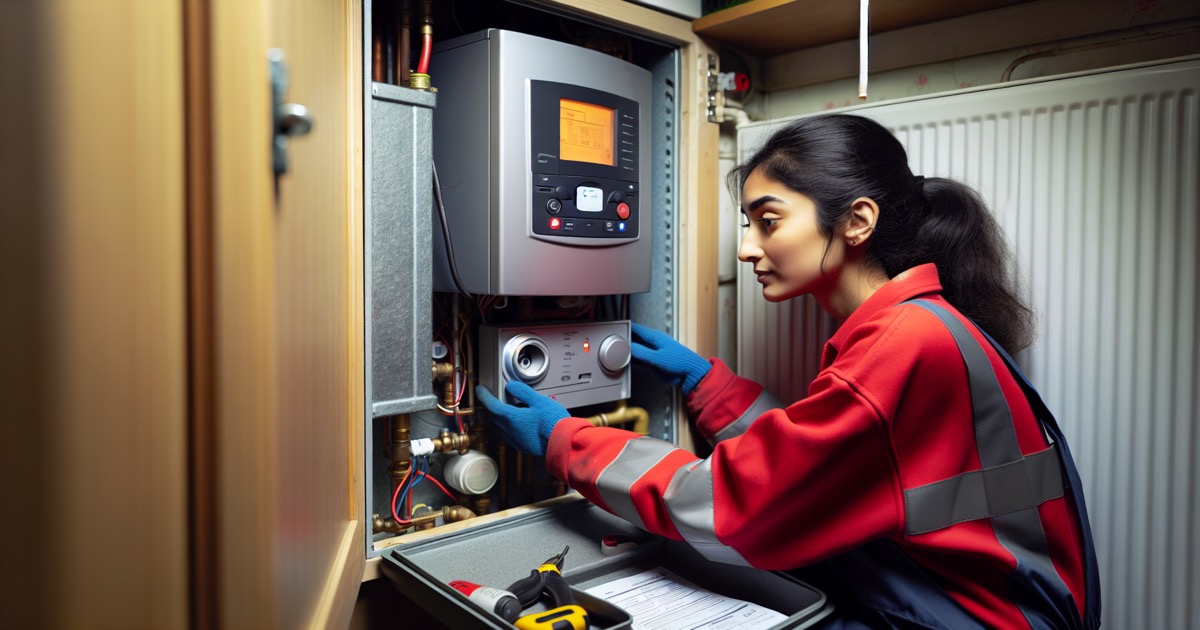
A Gas Safe registered engineer carrying out an annual service will check the boiler's combustion, inspect the heat exchanger and burner, test the flue and ventilation, check the condensate pipe and trap, and carry out safety checks on all gas connections. They will also note any parts showing wear that are likely to need replacement in the near future.
The service typically takes 45 minutes to an hour and costs between £70 and £130 depending on your location and the engineer you hire.
When to Book
August and September are the best months to book a boiler service. Engineers are less busy than they are from October onwards, you are more likely to get an appointment that suits you, and if any parts need ordering there is time to do that without your home going cold in the meantime.
If you have noticed any of the warning signs listed above, do not wait until September. Book now.
Find a Gas Safe Engineer Near You
Post your boiler service or repair job on QuoteBank to get quotes from Gas Safe registered engineers in your area. Check their reviews, confirm their registration, and get the work done before the cold weather arrives and waiting times stretch out.
Related Articles